The Science Behind the Removal of Moles Safely and Effectively
Moles are part of every human skin, appearing at any part of the body. Even though not all moles pose danger to our health, some of them can change their size, form or color and therefore require examination from an expert. Other moles are just cosmetically removed or because they are present in places where they often get irritated due to clothes or shaving.
At Define Clinic, we provide the best diagnostics and treatment procedures to make sure that all moles get properly assessed before they get removed. If you’ve searched online for mole removal near me, finding out how it’s done will certainly make you feel more confident.
Learning about Moles and Reasons for Their Appearance
Melanocytic naevi, or moles, are groups of melanin-producing cells known as melanocytes. People are born with them, or they can occur during childhood and even throughout their adult life. Genetics, UV light exposure, and hormonal shifts are the reasons behind their development.
The vast majority of moles are harmless and stable through one’s lifetime. Usually, they manifest as tiny brown, black, or flesh-coloured marks with a smooth or raised surface. Nevertheless, sometimes moles can change throughout the years, and that is the reason why people have to examine them regularly. Doctors recommend checking one’s moles with the help of ABCDE approach:
A – Asymmetry
B – Border irregularity
C – Colour variation
D – Diameter over 6 mm
E – Evolving appearance
Those who have moles with any of these symptoms should consult their doctors immediately. Early detection is one of the best options to diagnose skin cancers in time.
See also: 8 Myths and Facts About Laser Hair Removal Today
When Is It Time to Remove Moles?
It is not necessary to remove all moles, but there are cases in which it is suggested. Schedule an appointment if your mole exhibits:
- Fast changes in its size, coloring, or form
- Ongoing itchiness or pain
- Bleeding or crust formation
- Unusual borders
- Various colors on the mole
- New mole in adult years
There are those who opt for mole removal due to their aesthetic concerns or because the mole rubs against clothes, jewelry, or a razor, irritating it constantly. If you have been looking up mole removal near me lately, it means that you require professional opinion regarding your mole. Early consultation will give the opportunity to your dermatologist to examine the mole and provide the right treatment and advice.
Significance of Clinical Mole Examination
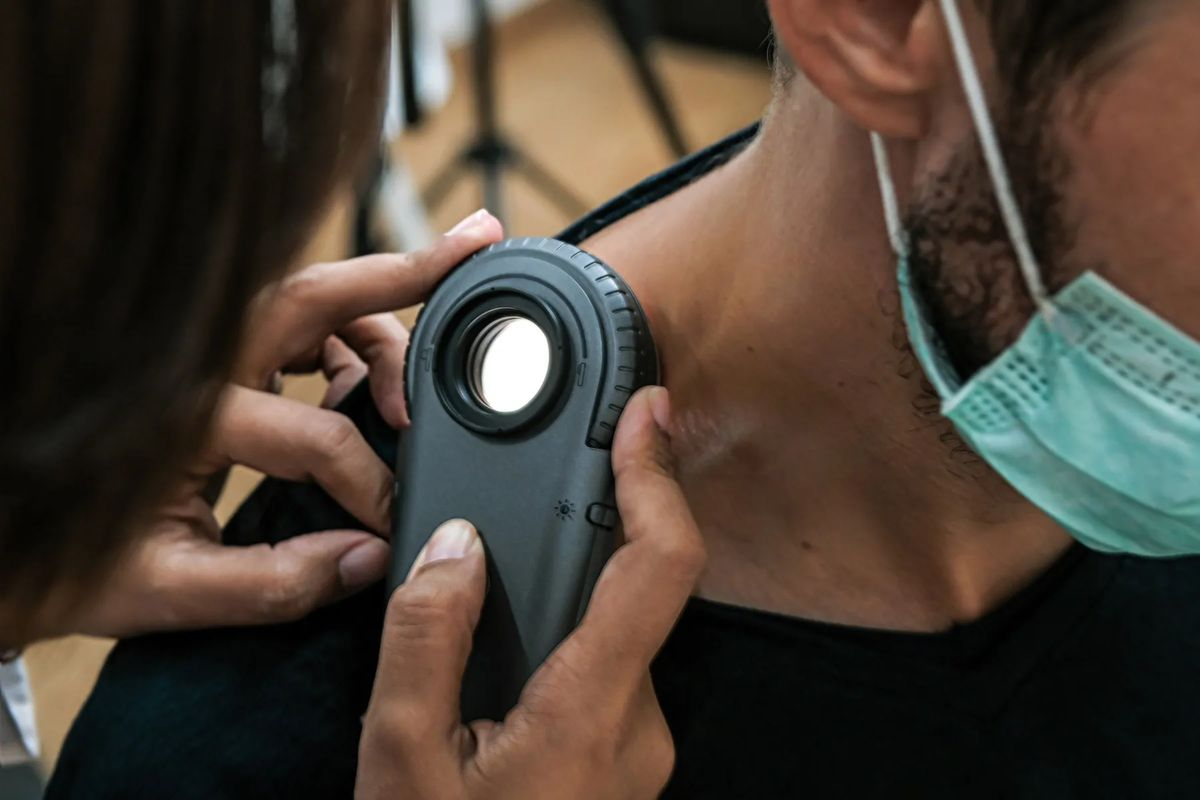
Prior to any mole removal, one has to get its professional evaluation. Doctors who treat skin conditions have specific devices like dermoscopy.
It magnifies the skin, allowing us to see some structures that cannot be seen with the naked eye, thus helping assess the structure of the pigmentation, its borders, and vascular system. A professional consultation also helps to choose the most appropriate way of removal depending on the following criteria:
- Mole’s size
- Location
- Depth
- Appearance
- Patient’s medical history
- Cosmetic considerations
Instead of doing home remedies and using over-the-counter products, visiting a knowledgeable dermatologist will not only ensure safety but also excellent cosmetic results. Many people looking for mole removal near me need clinics providing both accurate diagnostics and advanced treatments.
Science Behind Modern Mole Removal
Mole removal today is based on precision and safety of procedures. There are several ways of removal depending on mole’s type and removal reasons.
Excision Surgery
Surgery of excision is the most popular procedure for suspicious or deeper moles. After numbing the spot by local anesthesia, the doctor performs excision of the mole and a bit of surrounding skin.
Closing the wound with stitches ensures proper healing and reduces chances of recurrence. It also makes it possible to examine tissues in a laboratory when needed.
Shave Excision
Elevated and benign moles can be easily treated using shave excision technique. Here, the mole is shaved off to become even with the skin surface using a sterilized surgical blade. Shave excision is a fast treatment and does not require stitches in most cases. The recovery time is also rather short.
Laser Removal
This technique may be used for superficial pigmented lesions that have already been diagnosed as benign. The concentrated light destroys pigment cells without damaging adjacent tissues. It should be noted that laser technique is not recommended in case the lesion needs pathological examination as there will be no tissues left for laboratory analysis.
Healing, Scar Formation and Aftercare
Healing is a biological process after mole removal that includes several well-coordinated stages. At first, a blood clot is formed by the body to protect the wound from infections.
During the following days, inflammatory cells eliminate damaged tissues and inhibit infections. Collagen fibers start regenerating the skin and new skin cells cover the wound. There are several factors that affect how efficiently the skin heals, and these include:
- Age
- Skin type
- Size of the mole
- Mole removal technique
- Wound care
- Sun exposure
- Smoking status
- Individual healing process
Proper aftercare is critical in avoiding scarring. The patient should:
- Clean and keep the area dry
- Fulfill dressing instructions
- Not touch scabs
- Protect healing skin from the sun
- Apply recommended ointments or silicone scar products
Although scarring can occur in all skin treatments, advanced surgical techniques ensure that cuts are placed along natural skin lines to help make the scars invisible over time.
Importance of Choosing a Qualified Dermatology Clinic
Mole removal is much more than just removing a spot on the skin. It requires a thorough diagnosis, proper technique, the right amount of anesthesia, planning for the surgery, and proper post-surgical care.
Competent dermatologists know how to differentiate between harmless moles and those that might need further analysis. It helps avoid unnecessary procedures and allows us to pay attention to suspicious moles. When searching for mole removal near me, it might be worth considering the following:
- Board-certified dermatologists
- Expertise in mole evaluation and extraction
- Biopsy facility availability
- Up-to-date treatment equipment
- Patient testimonials
- Complete follow-up procedures
Seeking an experienced practitioner increases your chances not only of a positive medical result but also of a good aesthetic outcome.
Conclusion
The safe and effective treatment of moles is based on sound medical science, which includes correct diagnosis and advanced techniques in treatment and post-treatment care to ensure both safety and aesthetics. Though not all moles are dangerous, any change in their appearance cannot be overlooked, nor should cosmetic issues be ignored.