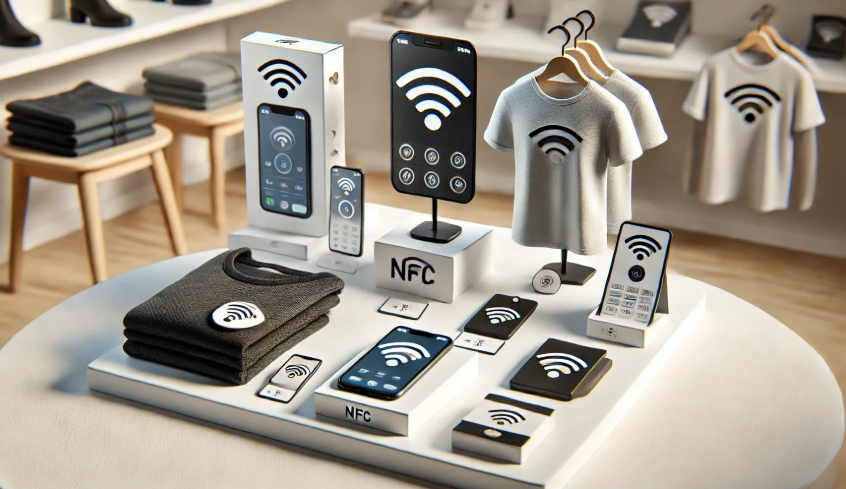
Tap to Enter: What a Decade of NFC Campaigns Taught Retailers About Consumer Patience
The first wave of tap enabled advertising arrived with unusual confidence. Chips were cheap, phones already had the readers, and the pitch to brand teams practically wrote itself: turn any physical surface into a doorway to a digital experience. A decade on, the technology has kept every one of those promises. The consumer response has been considerably more selective than the sales decks assumed.
The Sticker Costs Less Than the Poster It Sits On
Economics explain most of the early enthusiasm. A passive inlay built on an NTAG213 or NTAG216 chip costs a fraction of the print run it is laminated into, needs no power source, and survives years of handling. Compared with the cost of a beacon network or a bespoke app, the barrier to putting a chip in the field is close to nothing.
That low cost produced a familiar pattern. Tags went out everywhere at once, into window displays, transit shelters, table talkers and event lanyards, on the reasonable theory that a channel this inexpensive did not need to be rationed. Measurement came later, and it told a more complicated story.
Two Kinds of Tap, and Only One of Them Performs
The data across retail deployments splits cleanly. Taps that a customer initiates, where a visible prompt invites a deliberate action and the payoff is obvious, convert at rates that hold up against any other in store channel. Taps that a customer stumbles into, triggered by proximity rather than intent, convert poorly and generate a measurable amount of irritation.
The distinction matters more than it sounds, because the two look identical on a campaign plan. Both are counted as a tag read. Only one represents a person who wanted something. Brands that separated the two metrics generally scaled back the ambient placements and concentrated spend on tags with a clear, stated purpose printed beside them.
Timing compounds the effect. A shopper who has stopped in front of a display has already given the brand a moment of attention, and a tag placed there extends an exchange that is underway. A tag that fires while someone is walking to a train interrupts an exchange that never started. Same chip, same creative, entirely different reception, which is why placement now gets more scrutiny in planning than the landing page does.
The Notification Problem Nobody Budgeted For
Ambient placement runs into an obstacle that has nothing to do with creative quality. Handsets announce a detected tag on their own terms. Android polls continuously while the screen is unlocked, and iPhones read tags in the background without an app open, so the customer often sees an alert with no explanation of what produced it.
The scale of that confusion is easy to measure. Guides explaining NFC tag detected alerts draw steady traffic from shoppers trying to work out whether their handset has been compromised, and the answer is almost always mundane: a bank card in the same pocket, a hotel key, or a poster they walked past. A campaign that lands in the same notification tray as that ambiguity inherits the suspicion attached to it.
Retailers who tested signage alongside their tags found the fix was mostly editorial. Naming the destination, stating what the tap does, and putting a recognisable brand domain behind it removed most of the hesitation. Customers were not resistant to tapping. They were resistant to tapping something anonymous.
Authentication Turned Out to Be the Stronger Case
While marketing teams were refining placement, supply chain and brand protection teams were quietly building the more durable use case. A chip embedded at the point of manufacture gives every unit a unique, hard to clone identity, which supports several things a printed code cannot:
- Verifying that a luxury or pharmaceutical item is genuine before it leaves the counter
- Registering a warranty without asking the customer to type a serial number
- Carrying material and repair information for the digital product passport rules now moving through several markets
These applications share a useful property. The customer taps because they want an answer, so the interaction begins with intent rather than surprise. That is also why authentication programmes tend to report higher engagement than campaign tags placed in the same store.
What Disciplined Tag Placement Looks Like Now
The teams getting results have converged on a short set of habits. Tags go where a customer has already stopped moving, such as a fitting room, a product plinth or a queue. Signage states the destination in plain language. The landing experience loads without an app install. And tags are audited on a schedule, because a chip that anyone can overwrite for pennies is a chip that anyone can replace with their own.
That last point deserves more attention than it usually gets. Security researchers have repeatedly shown how easily a fresh label can be applied over a legitimate one on a terminal or a display, and a retailer carries the reputational cost of a tag placed on its property regardless of who put it there. A quarterly walk of every tagged surface is cheap insurance.
See also: Commercial Mortgage Loans: A Complete Guide for Business Property Financing
A Channel That Rewards Restraint
NFC did not underdeliver. It did something less convenient for the people selling it, which was to expose the difference between reach and welcome. Every phone in the market can read a tag, and that fact alone tempted a generation of campaigns into treating proximity as consent.
The brands still investing in the channel have generally arrived at the same conclusion from different directions. Fewer tags, placed where someone has a reason to stop, labelled honestly, pointing at something worth the two seconds it takes. It is a smaller programme than the early forecasts described, and it is the version that customers actually use.